Content
Exit interviews are a crucial human resources management tool. When an employee leaves the company, it is important to understand why. Exit interviews provide an opportunity to gather feedback on the employee’s experience and identify areas for improvement within the organization.
This article provides a step-by-step guide on how to conduct an effective exit interview and explains its purpose and how to use the gathered information to optimize business practices.
What is an exit interview?
An exit interview is a formal conversation between a departing employee and a representative from the human resources or management department. The purpose of this interview is to understand why the employee decided to leave their position and to gather their feedback on their work experience, the work environment, and company policies.
Importance in human resources management
Exit interviews are essential for gaining valuable insight into the workplace environment and factors affecting talent retention. According to a Harvard University study, companies that implement effective human resources management practices, such as ongoing training and talent development, are 30% more likely to achieve high organizational performance.
Exit interviews allow companies to uncover hidden issues that aren’t apparent during performance reviews or day-to-day interactions. Additionally, exit interviews allow companies to better understand employee expectations, which is crucial for improving retention and overall satisfaction.
Key objectives of the interview and why you should conduct it
An exit interview is not just about asking the employee why they are leaving the company. It should also provide insights to help improve various areas. Below is a list of main objectives to keep in mind when conducting this type of interview:
Identify areas for improvement within the company
It is crucial to identify any aspects of the work environment, organizational culture, or internal policies that may be negatively impacting employee satisfaction. The responses may reveal processes or situations that were previously unnoticed.
Improving employee retention strategies
Employees sometimes decide to leave due to a lack of career development opportunities or poor talent management. Understanding these factors can help you develop strategies for retaining your best employees.
Learn about relationships with supervisors and coworkers
Exit interviews provide insight into how employees perceive their supervisors and coworkers. Poor relationships with managers and toxic work environments are key reasons for employee turnover.
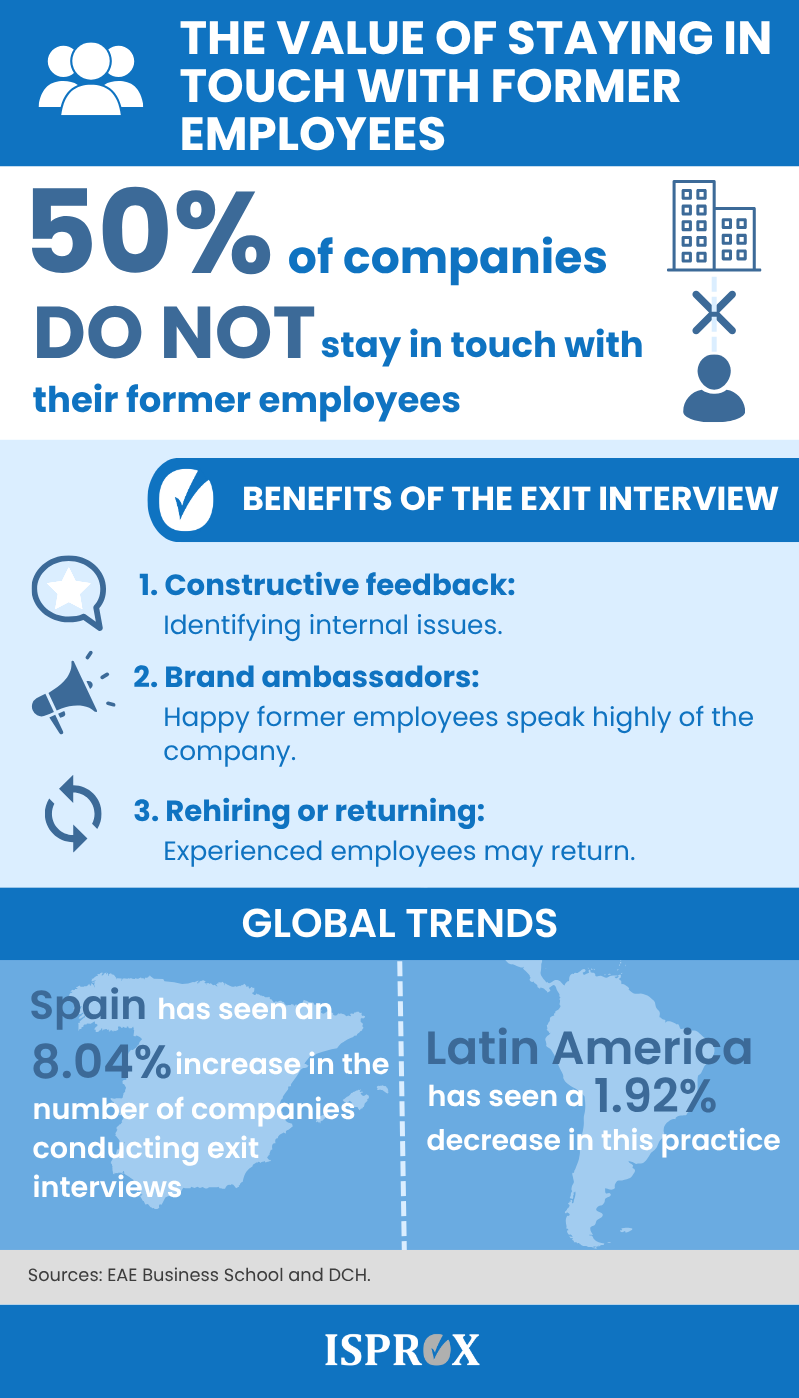
Strengthen the employer brand
Well-conducted exit interviews can improve a company's reputation. When you give employees the opportunity to openly and honestly express their concerns, you show that you value their input.
Who should conduct an exit interview?
The exit interview should be conducted by a human resources team member or a department manager with no direct relationship to the departing employee. The person conducting the interview should be objective and impartial and able to maintain a friendly yet professional tone throughout the conversation.
Why is it important that the immediate supervisor not do this?
The employee’s direct supervisor may not be the best person to conduct this interview because the employee may feel uncomfortable sharing negative feedback about their supervisor. The employee may feel more at ease expressing their opinions without fear of retaliation if the interview is conducted by someone from human resources.
Questions asked during an exit interview
Exit interview questions should be well-structured and designed to elicit detailed information. Below are some key questions to include in exit interviews. Ask these questions in an open-ended manner to encourage a natural and honest conversation.
Why did you decide to leave the company?
This is the key question for understanding why the employee made this decision. Let them speak freely and listen without interrupting. Their answer may reveal factors such as a lack of career development opportunities, poor working conditions, or personal issues.
How would you rate your overall experience at the company?
This question will give you an idea of how satisfied employees are. To elicit a detailed response, ask about specific aspects, such as company culture, benefits, and opportunities for growth.
What changes do you think could improve the work environment?
Here, you can find valuable insights on improving the workplace environment and team dynamics. Employees who leave may offer perspectives that current employees don't feel comfortable sharing.
Do you feel that your position was in line with your expectations and skills?
This question can help you determine if the employee felt the job was a good fit for their professional profile. A mismatch between the job description and the employee’s expectations is a major cause of turnover.
Did you feel supported by your team and your supervisors during your time at the company?
This question aims to understand the state of interpersonal relationships within the organization. A toxic work environment or poor relationships with supervisors are key reasons why employees leave.
Use of the information gathered during the exit interview
After completing the exit interview, the next crucial step is determining what to do with all the information gathered. This process isn’t just about filing away the responses or writing a report. The key is to critically analyze the data to identify patterns and areas that truly need attention.
Identify areas for improvement within the company
Exit interviews provide valuable information that can serve as a barometer for gauging the company’s internal health. Pay close attention if several employees mention the same issues. Unlike traditional methods, such as satisfaction surveys, exit interviews allow you to identify areas for improvement in a more specific and objective way.
Grouping similar responses helps you identify common patterns. For instance, if a significant number of employees leave due to a lack of professional development, the organization should consider offering training programs, career planning, and internal mobility opportunities.
Revise the selection and hiring processes
One of the main benefits of an exit interview is that it can help improve your hiring processes. Employees' reasons for leaving, such as a mismatch between the job and their expectations, may indicate that you aren't hiring the right candidates from the beginning.
Improving the relationship between leaders and teams
If several employees mention issues with their direct supervisors or team dynamics during exit interviews, it presents an opportunity to review how relationships are managed within the company.
Since employees often leave a company due to negative experiences with their supervisors or colleagues, exit interviews can serve as a valuable tool for identifying whether leaders are providing adequate support, whether there is a lack of communication, or whether teams are not collaborating effectively.
Based on this information, the company can offer leaders training in communication, team management, and emotional intelligence.
Review human resources policies
Exit interviews can provide valuable insight into the effectiveness of a company’s policies and benefits. For example, if an employee mentions that a company policy was unappealing or that certain benefits were insufficient, it’s time to review those aspects and make them more competitive.
Foster a culture of continuous feedback
Exit interviews are an excellent opportunity to foster a more open and participatory organizational culture. Showing that you value feedback from departing employees and take their opinions seriously sends a clear message to the rest of the organization that there is always room for improvement.
Use data to measure the company's performance
Information from exit interviews can also serve as a measurement tool. For example, if the reasons for leaving the company are related to a lack of opportunities or an unhealthy work environment, it may indicate shortcomings in key areas such as corporate culture, human resources management, or leadership.
Create personalized loyalty strategies
Finally, the data you collect can help you develop personalized retention strategies. For example, if a common theme in exit interviews is a lack of work-life balance, the company can assess workloads, promote reasonable working hours, and offer greater flexibility to its employees.
If employees mention a lack of recognition, however, it may be necessary to implement a more effective incentive and rewards system.
To create an attractive work environment, consider innovative recruitment and talent development strategies like those detailed in "7 Innovative Ideas for Recruiting Staff."
Sample Exit Interview Template
Below is a basic template for an exit interview, which you can adapt to suit your company’s needs:
Employee personal information:
● Full name
● Department
● Job title
● Check-in and check-out dates
Reasons for leaving:
● Why did you decide to quit your job?
● Was there anything in particular that influenced your decision?
Overall satisfaction:
● How would you rate your experience at the company?
● What did you like most about working here?
● What areas do you think need improvement?
Relationship with the team and supervisors:
● How was your relationship with your coworkers and supervisors?
● Is there anything you think could have been done differently?
Tips for businesses:
● What changes would you suggest to improve the work environment?
● What recommendations do you have for improving employee retention?
Exit interviews are a powerful tool for companies looking to improve their work environment and reduce turnover. Conducting them in a structured, objective manner allows you to gather valuable insights into what is really happening within your organization.
Keep in mind that the goal is not only to understand why an employee is leaving but also to use that information to improve processes and ensure the company’s future success.
Are you looking for talent to expand your team?
At ISPROX we help you find the right profile, saving you time and increasing your hiring success rate.

.svg)
 Spanish - Spain
 Catalan
 English
 Portuguese
 French
 Spanish - Mexico